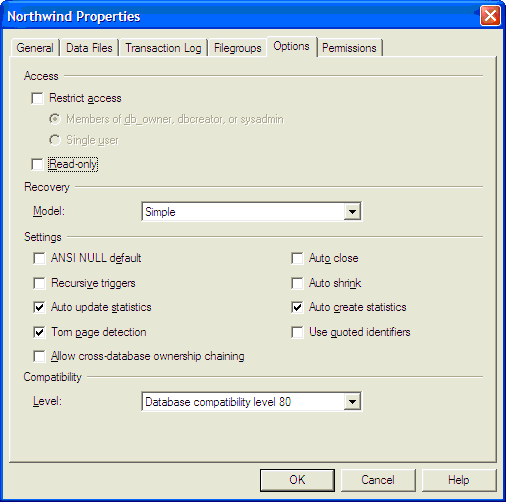
You might want to try out a full recovery model (I use it). Take a full backup once a week and take transaction log backups every day (or every hour if you wish). I think this is what you were aiming for. With this model you can restore to any point in time. It will use the the full backup and add the transactions up to a specific minute so you must keep the files that make up a set.
An alternative is a simple model with a full backup of the database every day (or whatever). Of course with this you could lose up to 99% of a day's work - you can only restore to the last available backup. You must keep one file only.
You can still do it using differentials but remember they hold all changes since the last full backup and not since the last differential backup (like the transactions option). Therefore you only need the last full and one differential (not all transaction files). Because they are bigger files they take longer than transaction backups. You must keep the full backup and latest differential.
It really depends how critical your use is, how frequently changes are made, if you wish to protect against database failure or user error too (deleting whole threads!). Option 1 is good but all sorts of other things can screw up your server too so think about these too.
Always keep more than one full backup generation in case a backup set fails! Keep backups off-site...fire and thieves, etc can kill your database AND your backups!
Good luck.
Edited by Nick-V - 21 September 2007 at 8:53am



 Topic Options

 Post Options
 Thanks(0)